
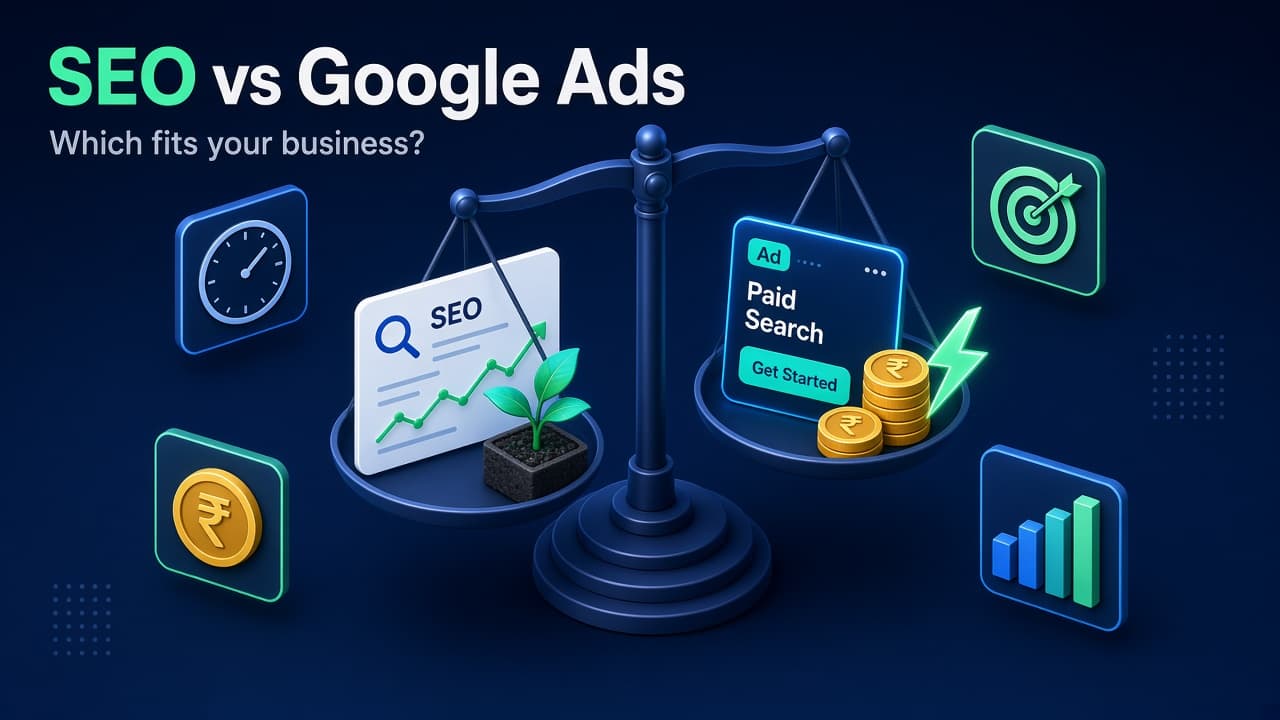
Businesses investing in digital marketing often face an important question: should they focus on search engine optimization (SEO), Google Ads, or both?
Both strategies can help businesses reach people using search engines, but they work differently. SEO focuses on improving a website's visibility in organic search results, while Google Ads provides paid advertising opportunities.
The right approach depends on business objectives, competition, budget, timeline and the value of acquiring a customer. For businesses in Hyderabad and across India, understanding these differences can help create a more effective digital marketing plan.
Author: Sai Charan Teja Rayudu, Founder & CEO at WebNextra. Last updated: 15 October 2026.
01
What Is SEO?
Search engine optimization involves improving a website so that search engines can discover, understand and potentially show its pages for relevant searches. SEO commonly includes:
- Keyword and search intent research.
- Helpful website content.
- Technical SEO and indexability.
- Internal linking and site structure.
- Local SEO where relevant.
- Relevant, trustworthy external mentions and links.
- Monitoring organic search performance.
SEO does not involve paying Google for each organic click. However, it requires time, resources and consistent work, and rankings are not guaranteed. Our SEO services in Hyderabad page explains how we approach this work.
02
What Is Google Ads?
Google Ads is Google's advertising platform. Businesses can use it to display paid advertisements across eligible Google advertising placements. For search campaigns, advertisers can target relevant queries and pay according to the campaign's bidding model.
Google Ads activities may include:
- Keyword and audience research.
- Campaign and ad group structure.
- Advertisement creation.
- Budget and bidding management.
- Landing page optimization.
- Conversion tracking.
- Lead quality measurement.
Paid advertising can generate visibility relatively quickly after a campaign becomes eligible to serve, but traffic and conversions depend on targeting, competition, budget and campaign quality. See our Google Ads management service for how we structure campaigns.
03
SEO vs Google Ads: Key Differences
1. Timeframe
Google Ads can begin driving visits after a campaign launches and starts serving advertisements. It still takes time to understand whether those visits produce valuable business outcomes.
SEO generally requires ongoing work before meaningful organic visibility develops. The timeframe varies depending on competition, website condition, content quality and authority.
2. Cost structure
Google Ads involves advertising expenditure and may also involve management fees, landing page development and tracking costs.
SEO may involve content production, technical improvements, specialist fees and link-related outreach. Organic clicks do not incur a direct per-click advertising charge, but achieving visibility still requires investment.
Neither strategy is automatically cheaper. Compare the cost of acquiring a qualified customer, not just the cost of a click.
3. Traffic potential
Google Ads can provide controlled paid exposure while a campaign is running and has sufficient budget.
SEO can build organic visibility across relevant searches over time. However, organic rankings fluctuate, competitors can improve, and search features can influence click-through rates.
4. Targeting and intent
Google Ads offers campaign-level targeting controls, including location settings and keyword-related targeting options. SEO involves creating relevant content and pages that match the needs and intent of searchers.
Both approaches benefit from understanding what potential customers are actually looking for.
5. Measurement
Google Ads reporting can help measure advertising expenditure, conversions and campaign performance. Google Search Console can help monitor organic search impressions, clicks, queries and page performance.
When properly configured, analytics and CRM systems can connect these activities to qualified leads and revenue.
04
When Should You Choose SEO?
SEO may be a strong priority when:
- Your customers regularly research services online.
- You want to build long-term organic visibility.
- Your website can support useful service pages and original content.
- You can invest consistently rather than expecting immediate results.
- Your business wants to answer customer questions throughout the buying journey.
For example, a Hyderabad-based service provider might develop useful pages for its core services and publish articles addressing customer questions. If most of your customers come from nearby areas, our guide to local SEO in Hyderabad covers the location-specific side.
05
When Should You Choose Google Ads?
Google Ads may be a strong option when:
- You want to test demand for a specific offer.
- You need paid visibility for relevant searches.
- Your business can respond to enquiries promptly.
- You have a clear landing page and conversion goal.
- You can measure whether advertising produces profitable customers.
Advertising is not a substitute for a good offer or an effective sales process. Our guide to Google Ads lead generation in Hyderabad walks through campaign setup step by step.
06
Can SEO and Google Ads Work Together?
Yes. Combining them can help businesses understand customer demand and develop a broader search strategy.
For example, Google Ads search term data may reveal the phrases customers use when looking for a service. Those insights can inform SEO content planning.
Meanwhile, SEO can help build organic visibility for relevant queries, potentially reducing reliance on paid advertising for some searches over time.
The two channels should have separate measurement and clear business objectives.
07
How to Decide Which Strategy to Prioritize
Start by answering five questions:
- Speed: How quickly do you need qualified enquiries?
- Customer value: What is the value of a new customer?
- Competition: How competitive are your target keywords?
- Conversion readiness: Can your website convert visitors into enquiries?
- Budget: What budget can you sustain while measuring results?
Use the answers to decide how to allocate resources. Review actual performance regularly instead of assuming one channel will always outperform the other.
If you would like a second opinion on the right mix, our digital marketing services team can help, or you can contact WebNextra directly. If your website itself is holding back conversions, start with website development.
FAQ
Frequently Asked Questions
Is SEO better than Google Ads?
Neither is universally better. SEO focuses on organic visibility, while Google Ads provides paid advertising opportunities. The appropriate strategy depends on business goals and resources.
Does Google Ads improve organic rankings?
Buying Google Ads does not directly improve organic search rankings. Paid and organic search performance should be measured separately.
Can SEO generate leads without advertising?
Yes. Organic search visitors can become leads when relevant pages meet their needs and provide a clear next step. Lead volume depends on visibility, search intent and conversion performance.
Should a new business start with SEO or Google Ads?
A new business can assess both options based on urgency, budget and customer demand. Paid campaigns can test relevant offers, while SEO builds a foundation for organic discovery.
How should I measure SEO and Google Ads?
Measure relevant traffic, qualified enquiries, conversion rates, acquisition costs and customer outcomes. Use Search Console for organic search insights and advertising or analytics reports for campaign performance.
Related reading
- Top services a digital marketing agency in Hyderabad should offer local SMEs
- Best-performing digital marketing tactics in Hyderabad to increase enquiries and walk-ins
- Top 10 Digital Marketing Agencies in Hyderabad
Want this done for your business? See Digital marketing services in Hyderabad.